Friday, May 20, 2022

Friday, February 26, 2021
Scalping Needs to Stop, Even If It Won't
Buying a highly sought after product only to resell it at a higher price constitutes a sin. Scalpers and advocates of unrestricted capitalism may argue that it's simply a matter of supply and demand, and it's legal, though not ethical, to sell a PlayStation 5 or Xbox Series X ($500 MSRP) on eBay for over $1000, or whatever price stupid idiots (with too much money) are willing to pay.
However, I'm willing to play devil's advocate. Perhaps scalping is merely a practical and clever way to take advantage of the free market. People are free to buy and sell whatever they want, and there are no laws indicating that it's illegal for someone to resell something they have purchased, no matter what the price.
Adam Smith's concept of the "invisible hand" suggests that though people are motivated by self-interest, the ultimate outcome is mutual benefit for all as people provide goods and services for one another based on supply and demand, generally without the need for restrictions. But when it comes to scalping, only the scalpers benefit, and regular consumers suffer.
And now bots are involved. One day I tried multiple times to add a PS5 to my cart on Walmart.com, only for the website to freeze for ten minutes prior to notifying me that the PS5 was sold out. This process repeated several times throughout the day during each scheduled restock. It's become clear that without specialized software, buying a PS5 or Xbox Series X seems impossible for many.
Granted, there are plenty of fortunate individuals who managed to obtain their consoles without having to pay scalpers. But when scalpers have made over $40 million in profit, it doesn't take a genius or idealist to understand that something needs to be done. We need to disincentivize scalping so we no longer see online images from scalpers of the stacks of PS5s they managed to procure with bots.
Undersupply of highly desired video game products is nothing new. When Super Mario Bros. 2 came out in the U.S. in 1988, parents spent hours and days traveling to stores, waiting in line, and being told that the game was sold out wherever they went. Wiis were impossible to find in stores between 2006 and 2008, and even Switches were in short supply throughout 2020. Scalpers and Nintendo certainly love each other.
Now scalpers have found new money-makers with the PS5 and Xbox Series X. While Sony and Microsoft are likely selling their consoles at a loss and doing nothing to address scalping, scalpers gain all the profits. Scalpers even have the gall to brag or plead for sympathy due to the notorious reputation they have gained (and even embraced) online.
Scalping groups like Crep Chief Notify charge their members a monthly fee in order to gain access to tools and resources that would allow them to instantly purchase products in high demand and resell them for hundreds of dollars in profit. They expressed "no regrets" over reselling 3500 PS5s, believing that they were "putting food on the table" for their members. I'd call them scum of the Earth, but that would be disrespectful to scum.
The public outcry has led to UK politicians attempting to pass legislation that would make it illegal to resell products purchased through bots. I doubt that any action will be taken in the US as much as I'd like to see it, as much as it's needed. We'll just have to wait and see how many more months or years it will be before PS5s and Xbox Series Xs can readily available. It would be nice if there were more security measures and a simple "one item per customer" policy to prevent scalpers from obtaining so many consoles in the first place.
Some scalpers have been lured by fake buyers and then threatened at gun point. Now that's not right. No one should be threatened or robbed, even if they're a scalper.
According to Dante, the fourth circle of hell is reserved for those consumed by greed. We can only imagine if there is a dedicated area in the circle for scalpers. But avarice is not limited to resellers; those who purchase products from scalpers are also part of the problem. Scalpers wouldn't scalp if no one bought from them.
I question who should bear most of the blame: the companies who fail to provide adequate supply and fail to take a strong stance against scalpers, the scalpers themselves, or the buyers who allow scalpers to profit in the first place?
If scalpers had no buyers, then the invisible hand would ensure that scalpers would seek out other (and hopefully more ethical) means of making money.
With full disclosure, I must admit that I myself have succumbed to my desire for certain limited and rare Nintendo/Zelda products. I paid over $200 for an NES Classic ($60 MSRP) on eBay after former Nintendo of America President Reggie Fils-Aime publicly stated that Nintendo would no longer produce anymore units. Apparently he and Nintendo lied, as more stock of NES Classic arrived at a later date. On the bright side, I managed to purchase an NES Classic for retail price as a gift for a friend. But I also I paid $150~ for the limited edition of Majora's Mask on the 3DS ($55 MSRP) and $400~ for the gold Majora's Mask edition of the New 3DS XL ($200 MSRP). Obviously, I would have rather paid the MSRP price for these items, but they were sold out everywhere. I even bought the European limited editions Majora's Mask 3D, Link's Awakening, and Breath of the Wild (for the stupid shoddy Master Sword statue) for well over the price they were worth. You can see how much I'm obsessed with The Legend of Zelda.
Although the Skyward Sword HD Joycons (MSRP $80) have already sold out within minutes, I'm waiting to see if more stock will be available before I consider paying another scalper on eBay. I dread the inevitable special edition of a revised Switch console that will release alongside the Breath of the Wild sequel. Once again, it will sell out despite my desperate efforts to secure one for retail price, and once again I'll have to pay a scalper hundreds of dollars more than the product is worth. That is, if nothing changes.
As much as I hate myself for giving scalpers money, I can seldom say no to Zelda merchandise. My obsession and addiction to The Legend of Zelda feels like the bane of my existence at times. Thankfully, outside of Zelda collectibles, I can refuse to pay scalpers for a PS5 and everything else.
In my last essay about microtransactions, another malfeasance resulting from greed, I quoted King Lear: "Nothing can come of nothing." In the context of Shakespeare's play, King Lear criticizes his daughter for refusing to praise him, but ironically her lack of words better expresses her sincere love for him than the saccharine and deceitful speeches of her older sisters. Sometimes, in certain circumstances, choosing nothing or inaction is the way to go.
At the same time, if nothing is done to prevent scalping, scalping is sure to continue. Sometimes it's better to do nothing, such as choosing not to buy products from scalpers or refusing to purchase microtransactions. Other times it's imperative to take action to address injustice and prevent unfair trading practices. Banning bots from shopping websites is a good idea. Implementing stronger security measures to ensure that the consumers buying the product are people who actually want it, and not scalpers who are just planning to resell it, is a good idea. Having more stock of a product (or at least promising and delivering more stock at a later date) that everyone wants is a good idea. The system for sellers and buyers should not favor or allow scalping. What I'm calling for is ethical economics - applying morals and common sense to promote fairer trading practices. Incorporating ethics into economics is nothing new; in fact, ethical economics is one of the oldest ideas in philosophy and economic theory dating back to Ancient India and Ancient Greece.
Desire is the source of all suffering - this a fundamental tenet in Buddhism. Attachment is the root cause of all of a person's problems. Becoming fully detached is the key to enlightenment and freedom from suffering, but for most people this is impossible. We want things. The fact that human beings are so susceptible to desire is a challenge the majority of us cannot overcome.
People want money. This is why scalpers scalp. People want shiny things they don't need. This is why consumers spend money on useless objects. In my case, my desire for collectibles outweighs my desire for money. I'm fortunate enough to have extra money that I can spend to add items I desire to my collection of aesthetically pleasing but useless memorabilia. If Dante saw my collection and learned how much money I've spent, he might place me in the fourth circle of hell too.
With how difficult it's been to get one's hands on a PS5, at least I've decided that I no longer care about buying one anytime soon. Most PS5 games can also played on the PS4 anyways. If only I could also say no to Zelda. Add the words "Zelda" and "Limited" or "Collector's Edition," and I become too willing to part with my money. Too bad Nintendo doesn't get that money if I'm forced to buy from a scalper. Even more sad is how much money I've given to Nintendo over the years. I really should stop being such a stupid idiot who keeps buying things I don't need.

Thursday, November 5, 2020
Microtransactions - The Plague of the Gaming Industry
There was once a time when microtransactions did not exist, when the price you paid for a video game was final.
But video game companies have sold their souls for profits, which comes as no surprise to anyone.
Big Boss once said, "The moment zero becomes one is the moment the world springs to life. One becomes two, two becomes ten, ten becomes 100."
One microtransaction might cost 99 cents. Perhaps you receive some custom skin or avatar. For $5, maybe you can gamble with loot boxes. And there's no limit to how many microtransactions a person can purchase. Microtransactions directly target people with addictive personalities, people who are vulnerable variable ratio schedules. As they succumb to temptation, their credit card charges could eventually amount to the thousands.
The public outcry against microtransactions has been loud and clear. However, the fact of the matter remains: microtransactions and lootboxes are lucrative. And video game companies will follow the money.
Last quarter, Activision Blizzard made $1.2 billion from microtransactions. $1.2 billion, in a single quarter. EA made $1 billion.
For its FY2020 earnings, Ubisoft made $636.92 million from microtransactions.
And this year Pokemon Go broke $1 billion in player spending (I know, people still play Pokemon Go??).

That's a lot of money. Remember when Blizzard made good games like Diablo and World of Warcraft? Remember a time when they didn't ask the audience at BlizzCon whether they had cell phones? A time when Ubisoft wasn't trying to constantly sell helix credits in Assassin's Creed games, when Nintendo and all these companies weren't so hell bent on draining every dollar and cent from players...
If you follow gaming news and trends, you'll notice that whenever a video game company obstinately and intrusively pushes microtransactions onto the consumer, the result is always public backlash, dislikes, and down-votes. Remember Shadow of War. Remember Star Wars: Battle Front II.
As an EA representative proudly states in the most downvoted Reddit post of all time, "The intent is to provide players with a sense of pride and accomplishment for unlocking different heroes."
Pride and accomplishment. $80 to unlock Darth Vader.
But the underlying question still remains: Why do so many people continue to spend increasing amounts of money on these microtransactions?
The easiest way to end microtransactions is to simply stop purchasing them. If they don't make any money, then video game companies will no longer include them.
Recently, while playing Assassin's Creed Origins, I noticed that there was an far-eastern/Chinese armor set that costs $9.99. That's the same price as the base game if you can purchase it when it's on sale. Part of this armor set is the "Sword of Goujian," named after a real sword found in China that dates back to the Spring and Autumn Period. Besides being a diehard video game nerd, and I'm enthralled with swords and martial arts weaponry. It was as if Ubisoft knew how to target me specifically. I was tempted to buy the Sword of Goujian in Origins. I thought about it a lot.
Then I realized something. If I gave in to the urge to purchase this virtual cosmetic item, I would be further contributing to the plague of microtransactions and its continued prevalence in the video game industry. And I hardly notice how my weapons look during gameplay most of the time anyways.
Ubisoft also includes "Time Savers" in Assassin's Creed Origins and Odyssey that allow players to gain more experience quicker or buy resources and in-game currency. Essentially, they can pay more money to play the game less. What a world we live in.
Of course, microtransactions have been around for a while now. From FarmVille and Clash of Clans to Call of Duty and Madden NFL, both "free-to-play" and "AAA" games are inundated with microtransactions. The "games as a service" model will continue.
Many people lack self control. Children can max out their parents' credit cards buying V-bucks or Robux or whatever bucks that certainly aren't real bucks. Parents can be stupidly idiotic enough to allow their children to do so.
Gamers, mostly of the adult variety, can also exhibit idiotic stupidity by playing FIFA or similar titles and throwing all their money away by purchasing lootboxes. And what is left afterwards?
Emptiness. Empty souls, and empty wallets.
But microtransactions aren't going away anytime soon. If anything, they will increase, so long as they continue to make these video game companies millions and billions of dollars. Video game companies are driven by profit more than anything else.
But not all video game companies are like this.
Sucker Punch didn't include microtransactions in Ghost of Tsushima, even foregoing them in its free online mode that they added last month. Some companies still care about making great games without trying to monetize the hell out of them. And at least Monolith eventually removed microtransactions from Shadow of War.
Unfortunately, the immense profits from microtransactions and lootboxes will continue to incentivize gaming companies to implement them, even at the expense of people's financial well-being and mental health.
Even if there is a push to designate lootboxes in video games as gambling, and even if EA is fined €10 million in Holland over lootboxes, there is currently nothing to stop these parasitic companies from including microtransactions in all their games.
All people have to do is stop buying them, then microtransactions would fade away into nothingness. But I guess the number of fools who continue to purchase them remains high. The people thunderously criticizing microtransactions and the ones silently purchasing them; these are different people, after all.
I've also learned that children even experience bullying if they don't have nice skins for Fortnite.
Even if these microtransactions aren't necessary to play most of these games, and players can choose to ignore them, their very existence continue to plague the video game industry and envelope it in the darkness of corporate greed. The best thing people can do is nothing: stop buying microtransactions.
Just. Stop.
"Nothing will come of nothing." - King Lear
Thursday, September 24, 2020
Video Game Wars (part 2)
Video game wars have changed. They're no longer merely about consoles,
ideologies, or regions. They're an endless series of digital battles, fought
by developers and machines. War, and its consumption of life, has become a
well-funded machine. War has changed. ID tagged gamers use virtual weapons,
use microtransaction-purchased gear. Adderall/caffeine inside their
bodies enhance and regulate their abilities. Attention control. Advertising
control. Mental control. Gaming control. Everything is monitored, and kept
under control. War has changed. The age of console wars has become the age of
control. All in the name of averting catastrophe from games of mass
destruction. And he who controls the gaming industry, controls history. War
has changed. When the gaming world is under total control, war... becomes
routine.
All credit goes to Old/Solid Snake's original opening lines in Metal Gear Solid 4, which comment on how war in the future is fully controlled by an AI network. Originally released in 2008, Metal Gear Solid 4 provides a bleak outlook on the year 2014.
2020 in real life seems a lot worse.
That's why we should look back and remember the good ol' days when video game
graphics were substantially worse and console wars were still a thing.
Generation 6: Enter Microsoft, Sony Wins Again - PS2 vs. Gamecube vs.
Xbox
157.68 million sales for the PlayStation 2. No other home console has even come close, though the PS4 and Switch may have a shot at breaking the record. Maybe.
Why was the PS2 so successful? Well, it had a DVD player, and DVDs, the precursor to Blu-Ray discs, were the most commonly used disc-based media format for movies and video games at the time. Everyone wanted, everyone needed, a DVD player. And it just so happened that the PS2 could play DVDs.
Then there is PS2's amazing library of games, which built on the original PlayStation's massive success. Devil May Cry and God of War made its debut on the PS2. You had Grand Theft Auto III, San Andreas, and Vice City, Metal Gear Solid 2 and 3, Jak and Daxter, Sly Cooper, Ratchet and Clank, Hitman, Kingdom Hearts, Final Fantasy X, Ico, and Shadow of the Colossus... so many amazing games that made Nintendo's lunchbox, the Gamecube, look like a silly toy.
The PS2 was also backwards compatible, allowing it to play PlayStation One
games. Truly, you needed no other machine if you wanted to play video games
and watch movies. Unless you wanted to play Nintendo games.
GameCube still had Smash Bros. Melee, Metroid Prime, and two amazing Zelda
games: Wind Waker and Twilight Princess. The GameBoy Advance also performed very well.
Of course, Microsoft entered the fray when it launched the original Xbox. For a new console that only found success in the western market, the Xbox had a respectable debut, so long as we ignore its first ginormous and unwieldy controller.
Microsoft had Halo, the quintessential first-person shooter that remains the
Xbox's flagship title. Then there was Fable, Knights of the Old Republic, and
Elder Scrolls Morrowind. And I absolutely love Ninja Gaiden Black.
The GameCube and Xbox sold 22 and 24 million units respectively. The PS2
utterly destroyed them. Its game library was much more robust, and it could
play DVDs without the need for additional software. The PS2 easily won this war.
Generation 7: Sony's Hubris, Microsoft's Red Ring of Death, and Nintendo Wants to "Play" - Xbox 360 vs. PS3 vs. Wii
The generation of HD graphics and motion controls. God damn motion controls.
E3 2006. An event that will forever live in infamy. The PS3 would have a launch price of $500 and $600 for the 20 and 60 GB models respectively. That's a very expensive machine.
If you watch this video, you will understand why E3 2006 and the PS3 launch was the greatest mistake that Sony ever made:
Risks were taken, but rewards were not reaped (but still much respect for Kaz Hirai). Giant enemy crabs were not present in Feudal Japan. 2006-2009 were unfortunate years for Sony.
I do not need to spend time to discuss the Wii, as I already have in sufficient depth in previous posts. Nintendo's marketing was very effective; the quote "We would like to play" began every Wii commercial. Clever. They targeted the casual audience. Smart. Everyone wanted a Wii at one point to play tennis, and it was always sold out from 2006 to 2009. It had a few great titles, but its graphics sucked and motion controls were idiotically stupid. Doesn't matter though - Nintendo still made tons of money. Now over 100 million Wiis are collecting dust in closets and attics across the world.
Performance and value wise, the Xbox 360 may have been the best overall console of this generation, had it not been for the dreaded red ring of death. To recap, more than half of owners of the original Xbox 360 model (54% according to a Game Informer survey) one day saw their beloved machine's power indicator ring give off a menacing, unceasing red light.
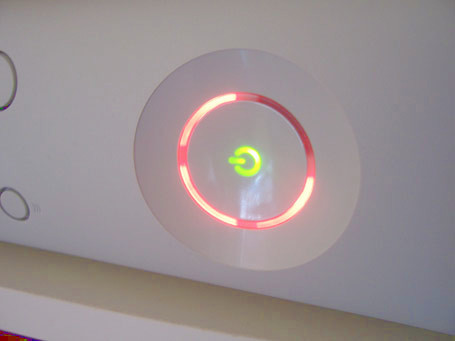
Due to a design defect prevalent in the original Xbox 360 models, this red ring signified a console's death. Microsoft offered repair services, but many individuals experienced the same problem on multiple occasions. The entire mess cost Microsoft over a billion dollars. That's a lot of money.
Also, this generation was marked by an obsession with motion controls. No, Nintendo was not the only one forcing motion controls down our throats. Microsoft had Kinect, and Sony had PlayStation Move. No one uses Wiimotes and Nunchuks, Kinect, or PlayStation move controllers anymore. Motion controls were not just a fad; they were an abomination to the gaming industry. They made games worse. Having just finished playing Super Mario Galaxy again recently, I am reminded of this fact.
However, this generation was also a renaissance for the video games industry. Video games truly became mainstream, and practically everyone had at least one or several of these consoles. Even if the PS3 never recovered from its terrible launch, the release of the PS3 Slim with its reduced price helped save Sony.
In terms of units sold, the Wii ranks first at 101.63 million, and the PS3 and Xbox 360 are nearly tied at 87.4 million and 86 million. These are all very impressive numbers.
In the end, everyone turned out a winner in their own right. But I imagine that the Xbox 360 owners who suffered from the red ring of death didn't feel like winners. Nor did Wii owners who flailed their arms around or injured themselves or others trying to play Skyward Sword or some other Wii game with stupidly idiotic motion controls. And we had to endure some extremely mind-numbingly stupid and disappointing E3 presentations during these years.
Nevertheless, the competition was truly healthy, and gamers will always fondly recall this generation and the countless amazing titles it provided.
On the Wii, we had Super Mario Galaxy 1 and 2, Metroid Prime Trilogy, Zelda Skyward Sword (Twilight Princess is a GameCube game, you fools), Donkey Kong Country Returns, Kirby's Return to Dreamland, Xenoblade Chronicles, The Last Story, Monster Hunter Tri, and an amazing Virtual Console library.
The PS3 had Uncharted 1-3, Metal Gear Solid 4, God of War III, and the Last of Us, whereas the Xbox 360 had the Gears of War trilogy and Halo (duh). I can't forget to mention the stellar third-party titles released on both PS3 and Xbox 360 that are among the best of all time: Mass Effect trilogy, Batman Arkham Asylum and City, Assassin's Creed, Bioshock, Portal 1 and 2, Red Dead Redemption, and Dark Souls. Too bad the Wii didn't get these games because its graphical capabilities were too weak and its motion controls sucked ass.
Generation 8: We Are Gamers - PS4 vs. Xbox One vs Switch
Thus began the second era of modern gaming. Of course, "modern" is always a relative term. Ten or twenty years from now, who is to say how much further video games will evolve?
Technically, this generation isn't over. It's not over yet, not yet, as Liquid Snake is known to say.
You know what else is stupid, besides motion controls?
Microsoft first announcing that the Xbox One would require a constant online connection, that people could not allow their friends to borrow their games, and that the console would sell for $500. It came bundled with Kinect, too. Essentially, Microsoft wanted to do everything they could to become the undisputed loser of this generation. And they succeeded. 50 million Xbox Ones sold is respectable nonetheless, but when the Switch has already sold over 61 million units after having only been out for three years, and the PS4 is standing at over 112 million units and rising... it sucks to be Microsoft in this generation.
However, Microsoft still has billions and billions more dollars than Sony and Nintendo do. So no worries?
The PS4 is by far my preferred console of choice. The quality and quantity of the PS4's first-party games make me feel absolutely spoiled. After finishing Final Fantasy VII Remake and Ghost of Tsushima this year, I'm so happy that I have my PS4. Even if Sony botched the PS3 launch, it certainly learned from its mistakes and recaptured its former glory.
Sony announced the PS4's launch price of $399 and automatically won the war for this generation. It was very reminiscent of how the original PlayStation killed the Sega Saturn. But Microsoft isn't dead; it has far too much money.
Nintendo had an unusual life cycle for its consoles for this generation. Or rather, the lifespans of the PS3 and Xbox 360 were so long, that Nintendo felt the pressure to release a new console in 2012.
The Wii U was an absolute failure, as much as I "liked" it. But more on that later. Now even Nintendo pretends that the Wii U never existed, with most of its games being re-released on the Switch.
The Switch.
You know what the Switch is: a hybrid handheld and home console. You have one, or you want one.
This could be Nintendo's greatest console ever. It continues to sell like crazy. Since everyone has been stuck at home due to the pandemic, millions of people have jumped on the Animal Crossing bandwagon. Bums.
Breath of the Wild, Mario Odyssey, Smash Ultimate, Octopath Traveler, Fire Emblem Three Houses...
But the PS4 has Bloodborne, Uncharted 4, God of War, Horizon Zero Dawn, and Persona 5...
It's hard to say which console I love more... only because I need a Nintendo console to play Zelda.
Gaming only keeps getting better.
Generation 9 Into the Future - Xbox Series X/S vs. PS5 vs. Switch
The video game wars continue, but no longer are they fought simply through hardware. Console exclusives still remain powerful weapons, and Sony and Nintendo have always flexed their IPs to ensure that gamers felt the absolute need to buy their consoles. However, Microsoft just announced that it has purchased Bethesda, the publisher of Elder Scrolls, Fall Out, Doom, and Wolfenstein, for $7.5 billion dollars. Like I said before, Microsoft has a lot of money.
When it comes to online gaming services, Xbox has always been the
winner. Xbox Live launched on the original Xbox, and since then Sony and
Nintendo attempted to copy Microsoft by offering their own online
subscription services. Now it has become mandatory to be subscribed to
Xbox Live, Playstation Plus, and/or Switch Online to play most console
games online. As we all know, Nintendo has always been an incompetent
bungler when it comes to online services.
Looking to solidify its dominance in the online subscription battlefront, Microsoft cares less about the number of consoles they sell and moreso about the number of new subscribers to Xbox Game Pass they can gain. And by god is Xbox Game Pass an amazing deal. $10-$15 a month and over 100 games, including new releases. Add that to their xCloud streaming service, and Microsoft is well-positioned to dominate, or at least perform well, this next generation. Though I've somehow managed to forgo buying an Xbox 360 and Xbox One up until now, I'm highly tempted to eventually purchase an Xbox Series S and subscribe to Xbox Game Pass just so I can add dozens of games to my already excessive backlog of hundreds. But seriously, Microsoft, please come up with better names for your consoles.
Xbox and Xbox 360 < These names are OK.
Xbox One < Huh?
Xbox One S and Xbox One X < What?
Xbox Series X and Xbox Series S < ...
And now that Microsoft owns Bethesda, we can anticipate what will happen next...
Bugs!!!!!!!! Massive single-player role-playing games that everyone loves but are buggy as hell at launch! Fall Out 76 will make a come back and piss off even more people! Skyrim will never stop being re-released!!! And yeah, Skyrim, Fall Out, and Doom are still in my backlog... still...
...
Metroid Prime 4 and The Breath of the Wild sequel are on the horizon, or at least in the distant future.
The announcement of God of War Ragnarok means I won't be able to delay purchasing a PS5 for very long.
Pre-orders for the PS5 and Xbox Series X and S have been a complete shit show thanks to scalpers and bots. I'm glad that I'm okay with not having either console at launch.
I look forward to the future.
Now that I've finished chronicling (though it was more commentary than chronicle) the video game wars, there are still some final topics I would like to briefly cover. I may discuss them more thoroughly in future posts.
PC Master Race
Honestly, though I myself am not a PC gamer, I have to admit that gaming on the PC is simply just better than gaming on consoles. The performance on a well-built PC will always surpass any home console. The level of customization and mods one can apply, and the fact that games often go on sale for such cheap prices on Steam, make PC gaming a true paradise. But Sony's and Nintendo's exclusives keep me tied to their respective consoles.
The ability to update your hardware and graphics card without having to purchase an entirely new machine is enticing. And for PC gamers, there is increasing access to traditionally console-exclusive titles such as Octopath Traveler, Horizon Zero Dawn, and Persona 4 Golden. The past, present, and future of gaming has truly always been with PC.
Pre-orders of Nvidia's new RTX graphics cards were also a complete shit show, again thanks to scalpers and bots. And these cards already make the PS5 and Xbox Series X seem outdated.
Nintendo Always Wins with Handhelds
Sony did a decent job with the PSP. I enjoyed playing Castlevania Dracula X Chronicles, Metal Gear Solid Peace Walker, Final Fantasy Tactics War of the Lions, and Kingdom Hearts Birth By Sleep on my PSP very much.
But the Vita? Hahah. Check below for console failures.
The fact that no other non-Nintendo handheld system is really worth mentioning (unless you like the Sega Game Gear and the six AA batteries it required) further attests to the fact that Nintendo always wins when it comes to handheld consoles.
The Gameboy, including the Pocket and Color variations, had Pokemon. 118.69 million units sold.
The Gameboy Advance was basically a portable Super Nintendo with far worse sound. So many great games on the GBA, including many re-releases. 81.51 million units sold.
The Nintendo DS. Before everyone wanted a smartphone, they wanted a DS. The second-best selling console of all time at 154. 9 million units sold. Touch screen controls weren't as stupid as motion controls. And of course, the DS had a lot of Pokemon games.
The 3DS. Nintendo recently announced that the 3DS and 2DS have been discontinued. They had a good run. Stereoscopic 3D technology was always stupid, though. $250 for a handheld was stupid. Nintendo messed up the 3DS's launch with the hefty price tag and sparse lineup of games. Like the PS3, the 3DS later made an amazing comeback as its game library (Super Mario 3D Land, Mario Kart 7, Smash Bros, Zelda Link Between Worlds, and Fire Emblem Awakening, Fates, and Echoes to name a few) continued to grow. 75.77 million units is not bad, considering the 3DS's terrible launch.
And now we have the Switch.
Give Me More Money - Epic Games vs. Apple and Google
This is a fascinating story that is still developing. Epic Games, owner of the Unreal Engine and Fortnite, caused a ruckus a couple years ago when it launched its Epic Games Store to challenge Steam's monopoly. Now it is challenging Apple and Google in regards to 30% cut that developers have to provide to Apple and Google when selling their apps on the App Store and Google Play. Everything started when Epic Games updated Fortnite on these platforms with the option to purchase V-bucks at a 20% discount if users purchased the V-bucks directly from Epic. As a result, Apple and Google subsequently took down Fortnite from their stores. Apparently anticipating this response, Epic Games launched the pre-emptive strike when it sued Apple and Google for "antitrust and anticompetitive behavior."
The legal battle between Epic Games and Apple is particularly worthy of attention. Epic Games even made this video parody of 1984. Looks like they planned ahead.
Earlier this month, Apple counter-sued Epic Games, citing a breach of contract. There has been a lot of debate regarding access to the Unreal Engine, which many iOS developers rely on to create their games. Apple terminated Epic Games' developer account, seeking to force Epic Games to comply with Apple's App Store guidelines, with potential ramifications of hurting other developers who depend on Unreal Engine. Thankfully, a temporary restraining order against Apple has been filed to prevent developers from getting caught in the crossfire of litigation. Epic Games has even gotten Microsoft to provide its support. Alliances have been formed, and battle lines have been drawn. Things have already gotten pretty ugly. In the end, both companies primarily care about making more money for themselves. We'll see how this game plays out.
Pure Evil - The World vs. Tencent
Tencent made WeChat, and it sends people's private data and personal messages to the Chinese Communist Party upon request.
Tencent owns a 40% stake in Epic Games, maker of Fortnite.
Tencent owns Riot Games, maker of League of Legends.
Tencent, in partnership with Nintendo, is making a League of Legends-style Pokemon game. Tencent also helps Nintendo sell Switches in China.
Tencent has partnerships with Activision and Bluehole to develop and market mobile versions of Call of Duty and PUBG in China.
Every fact listed here is proof of Tencent's pure evil.
Tencent is the enemy of the world.
Their eventual and inevitable destruction is necessary to save and liberate the world of gaming, and the Chinese people as a whole, whose dependence on Tencent have fueled its profits, monopolies, and utter control over the Chinese masses.
Beloved Console Failures
Virtual Boy: The biggest loser of them all, with only 770,000 units sold. The first console with stereoscopic 3D graphics, released 16 years before the 3DS. Red. Painful, bloody, red.
Atari 5200, Lynx, and Jaguar: Yes, Atari still made consoles up until 1993. No one cares, except some weird collectors.
Nintendo 64DD: The Nintendo 64 was supposed to have a disc-drive add-on, just like how the PlayStation was originally supposed to be a disc-drive add-on for the Super Nintendo. Nintendo just never understood how to handle disc drives prior to the GameCube and Wii.
Sega Saturn and Dreamcast: Sega's last consoles had some good games, and to this day many people still love the Saturn and Dreamcast. Unfortunately, their poor timing, low sales, and tragic fates ensured their demise.
PS Vita: The console that was supposed to offer PS3 level experiences on a handheld device. Had Sony provided more support for the Vita, offered more games, and didn't force us to buy their overpriced proprietary memory cards, perhaps the Vita could have sold more than 15 million units. At least it's a decent console to play PS One games?
Wii U: The failure lies in the name. Many people didn't even know that it was an entirely new console, nor that it even existed. The Wii U had a great library of first-party titles, but most of them have since been re-released on the Switch, making the Wii U's obsolescence all the more absolute. At 13.56 million units sold, the Wii U was Nintendo's worst performing home console barring the Virtual Boy. Tis' unfortunate, since the Wii U did have some great games.
Recently I hooked up my Wii U again to play Monster Hunter 3 Ultimate. It's been 2 years since I last turned it on. I was astounded by how much space it takes up - the console's body, the external hard drive it's connected to, the size of the tablet controller, the console's power adapter with its giant grey brick, and the other power adapter to charge the tablet controller's measly battery life...
At least all the flaws and failures of the Wii U predicated the ultimate success of the Switch. Learning from failure truly does lead to success.
Wednesday, August 19, 2020
Video Game Wars (part 1)
The Xbox Series X and PS5 are looming on the horizon. Switch consoles are still sold out since everyone wants one. Epic Games has begun a war with Apple and Google. Oh how times have changed.
We used to call these types of conflicts "console wars," but these wars are no longer restricted to simply marketing one console over the other.
Before, the wars were all about how "Genesis does what Nintendon't," which consoles had better graphics, how CDs could store more data than cartridges could despite the horrendous loading times, which consoles had better first party games and third party support, which controllers didn't suck, which consoles got red or yellow rings of death, and how motion controls were stupid despite them being shoved down our throats.
Let's briefly recount the various video game and console wars that have occurred throughout history.
Generations 1 and 2: Atari vs. Itself and too many other consoles
Everything began with Pong and the Atari 2600... which is not true; the Magnavox Odyssey came out first in 1972, but nobody remembers that. The Atari 2600 is the first major video game console that truly found success with the American market. There were way too many other consoles released during this time, and I'll not bother listing any of them. All you need to know is that Atari essentially committed suicide and nearly destroyed the entire video game industry. Now if it weren't for Atari, video games would never have become a legitimate or lucrative business, but Atari also nearly brought about the extinction of video games after releasing to many shitty games. Pac-Man on the Atari 2600, E.T., the Video Game Crash of 1983, and the rest is history.
Generation 3: Nintendo the Savior
R.O.B. and the Nintendo Entertainment system (or Famicom in Japan) saved the video games industry. Of course, the NES was not marketed as a video game console; no one would have bought it if that were the case. It was a "home entertainment system" that included a toy robot and gun. You need to know what the kids like, after all. Sega released the Master System, but few people care about that. No wars happened during this time; it was a golden era of peace and prosperity. There were also a lot of golden Zelda cartridges.
Nintendo was a savior that later became an evil overlord.

Generation 4: The 16-Bit Wars - Sega Genesis vs. Super Nintendo
The 90s were when the real wars began. Both the Sega Genesis and Super Nintendo were brilliant consoles with gorgeous 16-bit graphics. The Sega Genesis had Sonic, Golden Axe, Phantasy Star, Streets of Rage, Gunstar Heroes, Shining Force, Comix Zone, Ecco the Dolphin, and a bunch of other weird and cool games. The Super Nintendo had Super Mario World, Link to the Past, Super Metroid, Star Fox, Super Mario RPG, Final Fantasy, Dragon Quest, Chrono Trigger, Donkey Kong Country, Kirby, Yoshi's Island, Mega Man X, Secret of Mana, and Earthbound. All masterpieces.
It was a true war. Watch this old Sega Genesis commercial, and you will understand:
The Sega Genesis had the better, uncensored version of Mortal Kombat. Aladdin for Sega Genesis allowed you to use a sword, so therefore the Sega Genesis was better. If you liked Nintendo more, you were uncool. You were sad and pathetic. You were a child, a baby, playing baby games like Mario. Or you played the game in which Yoshi carried baby Mario on his back.
But, in fact, the Super Nintendo was actually better. There were more better games. The Super Nintendo had A Link to the Past, Final Fantasy IV-VI, Mega Man X, and Chrono Trigger. Therefore, the Super Nintendo was better. 49.1 million consoles sold for Super Nintendo vs. 35 million sold for Sega Genesis. The numbers speak for themselves. Nintendo smoked Sega. Genesis did not have a lot of the amazing games that the Super Nintendo had. Nintendo also released the Game Boy line of consoles... and Pokemon... so I guess Nintendo is the clear winner of this war.
But the Sega Genesis had Sonic 2 and Sonic 3 and Knuckles. Therefore, the Sega Genesis is the best.
In truth, the Super Nintendo is my favorite console of all time.
Sega fans were insecure ignoramuses pretending that they were cooler and more mature because they had edgier games with blood, all because Sega marketed to an older demographic. And then there's Night Trap. Sega also looked like a fool during the 1993 congressional hearings on video games.
But Nintendo fans were babies who refused to grow up. They clung to their innocence and remained blind Nintendo fanboys/fangirls even as they aged and became "adults." Now they, together with the fake/non-fans and bandwagoners, play Animal Crossing on their Switches or pretend that they know all the characters in Smash Ultimate. They probably still don't even know how many Links there are across all the canonical Zelda games.
Bums, posers, and phonies, the lot of them!
Generation 5: How Sony Defeated the Evil, Beloved Overlord Nintendo - Nintendo 64 vs. PlayStation vs. Sega Saturn
Video games jumped into the third dimension.
Consumers were presented with difficult questions: Cartridges or CDs? Want to buy a memory card?
Thank you, Nintendo, for spurning Sony. I wrote in another article how the falling out between Nintendo and Sony resulted in the birth of the PlayStation, thereby requiring me to buy multiple consoles every generation since I can't have all the games I want on just one console for some reason.
I also believe this is the generation when Nintendo began to fully embrace its identity as a sinful, evil overlord that enslaves its fans by taking advantage of their love for and addiction to its phenomenal first-party games. I believe I've talked about this topic already.
Sega made a grave error, then lost this war before it even began. No one cared about their advertisements that targeted a more mature audience. No matter how hard Sega tried, it couldn't catch lightning in a bottle for the second time. They released their console too early with too few games, for $399.
All Sony had to do was say "$299." Then they won the war.
The Nintendo 64 continued Nintendo's tradition of obstinacy and relying on first-party games to sell its console. This didn't work that well, or I suppose it worked to an extent.
Mario 64, Star Fox 64, Ocarina of Time, Majora's Mask, Pokemon Snap, Smash Bros., Golden Eye, Perfect Dark, Banjo Kazooie, Mario Party and Mario Kart 64. These games were damn good.
But...
PlayStation
had
Final Fantasy VII-IX, Final Fantasy Tactics, Resident Evil 1-3, Tomb Raider 1-3, Crash Bandicoot 1-3, Spyro, Xenogears, Vagrant Story, Chrono Cross, Suikoden II, PaRappa the Rapper, Tekken 3, Castlevania Symphony of the Night, Mega Man Legends...
And
Fucking
Metal Gear Solid.
I hear someone shout, "Numbers please!"
Over 100 million consoles sold for the PlayStation. Less than 33% of that for the Nintendo 64. Less than 10% for the Sega Saturn.
Too bad these games haven't aged well graphically. Too bad that the PlayStation Classic is trash since it's missing almost all of the games I mentioned.
But the Nintendo 64 had some damn good games. The PlayStation just had more. This trend will continue.
In part 2:
Generation 6: PS2 vs. Gamecube vs. Xbox
Generation 7: Xbox 360 vs. PS3 vs. Wii
Generation 8: PS4 vs. Xbox One vs Switch
PC Master Race
Nintendo always wins with handhelds
Epic Games vs. Apple and Google
The world vs. Tencent
And the beloved console "failures."
Thursday, July 9, 2020
What a Mess
"Smash didn't make pedophiles. Pedophiles made Smash."
A literal interpretation is unwarranted. Though humorous, maybe inaccurate, I believe it strikes at the heart of the problem.
Japanese culture, Anime culture, video game culture. They all silently condone, advocate, and even commercialize pedophilia. I used to be an Anime fan. I still am a video game fan. I used to attend Anime conventions, and though I never got involved in anything particularly raunchy, I was aware of the situations that people could find themselves in, and the situations that people were actively seeking out.
Look at how Nintendo put together Palutena's reveal trailer for Smash 4. Look at the increase in chest size they gave to Peach. Look at Zero Suit Samus. Nintendo cannot say it has not objectified women, even if it has only done so subtly.
The fact that the term "waifu" exists, that many Anime and video game fans have been subliminally encouraged to become pedophiles, that Smash is advertised as a "party" and "kid-friendly" game, which encourages minors to attend events, expose their vulnerability, and stay at hotels filled with horny, malodorous, and loud male nerds in their early to late twenties...
The fact that the competitive Smash scene has always been grass roots, unregulated, and filled with toxic individuals who felt empowered by their positions to show no restraint, even at the expense of the victims they abused.
The fact that Nintendo never supported competitive Smash, thereby leading to the development of such a noxious community and culture filled with toxicity, abuse, and malevolence.
The victims who suffered, the victims who were falsely accused, and those who have yet to speak out. Everything is unfolding, and the curtain has drawn back. Who knows if competitive Smash will survive?
Everything that's been happening recently, all the news and allegations, and the resulting disillusionment... It's been a while since I've felt disillusionment so heavy. Ironically, my primary reasons for never attending Smash Bros. tournaments were 1. I still wanted to get better with a real main before putting myself out there and 2. There were too many young people.
I'm an OAF. Old as fuck. Two people who have gone to tournaments have beaten me in Smash. And they were my students no less. But I also beat them a few times.
I've always wondered what it would have been like to be a part of the competitive Smash scene. I've always heard about its toxicity, but it wasn't until Smash Ultimate that I started considered myself a "competitive" player. And I really was considering going to tournaments.
None of what has happened surprises me, but with the extent and severity of the incidents... I'm perturbed to say the least. I'm really depressed that this has been the true reality of the competitive Smash community, or a significant part of it.
I was up until 1 AM reading the most notable Twitlongers, Jisu's Google document with all the compiled screenshots, and ZeRo's apology and announcement that he was withdrawing from, well, everything. I watched Mew2King's, Leffen's, and Hungrybox's response videos. I'm currently watching the Sky House stream while I'm writing this post.
I was watching ZeRo's content almost everyday up until the revelations. Though he's my junior by seven years, I admired his tenacity and forthrightness, persevering through all the hatred directed toward him throughout his life and decisively proving that he was best player in Smash 4, and I appreciated his humor. For a man who repeatedly states that he's still a virgin in public, his allegations and the resulting fallout have shocked me the most.
I'm not surprised that he made advances to under-aged girls online. Teenage girls and boys often don't realize how easily they invite and, at times, encourage the advances of older men, whether intentional or not. They're young; they're naive.
I also don't overlook the traumatic past that ZeRo shared with us. Though he claims he did not share his story to garner sympathy, the real purpose behind his story is clear. To explain, provide context, and garner sympathy.
It's easy to say that "I was young and didn't know what I was doing." This applies to both the perpetrators and the victims. The immense trauma and suffering that has resulted, however, is more than evident.
I will need more time to process all of this. It has affected me and brought down my mood more than I expected. But I still choose to face the reality and will continue to look into the individual cases.
I pity Nairo, though this my no means condones his decisions to allow the sexual encounters to occur with a minor. His accuser was under-age, but still guilty of making advances, performing fellatio on Nairo on more than one occasion, then revealing the truth publicly after being paid and asking for more money to attend an event (?). Or perhaps I'm not reading his chat-log and text screenshots correctly? To me, they were superfluous and pitiful (and not in the way you might think). But because he was a minor and Nairo an adult, we deem Nairo guilty based on our laws and ethics.
Jisu is a talented artist, who independently built her respectable career despite the malicious Peach player who manipulated, extorted, tormented, and I can't even bring myself to write about what he has done. After reading Choe's 2018 post, I can't put into words how terrible I feel that anyone had to suffer and be manipulated, neglected, and spurned to such a degree by those whom they trusted and loved. I commend and thank her for her bravery, and I hope she can eventually find solace.
I'm still watching Sky's video. I notice that it's scripted. And poorly prepared.
It's always easy to say "I should have done more."
How about we just do more and do better? I'm hoping that one day I don't need to feel ashamed of my gender due to the continued existence of so many cruel and pathetic men.
Had Nintendo supported and helped monitor the competitive Smash community, at least as far as sexual misconduct goes, perhaps things could have turned out better. Or maybe I'm just a fool.
If this is the death of the current competitive Smash scene, so be it. Let's rebuild it into something better.
And how the fuck do 20+ people live in the same house?
Tuesday, April 28, 2020
Final Fantasy VII Remake: Mastering Fate
Fate, or destiny, is an overused word. Discussed excessively in literature and philosophy. Questioned, defied, or embraced by countless fictional and actual individuals.
Fate is a topic I personally find simultaneously banal yet fascinating. To what extent do people have control over the outcomes in their lives? Undeniably, there are certain forces that are simply beyond our control, but where do we draw the line drawn between actions produced by free well and actions dictated by fate?
Classical Western tragedies (Greek, Shakespearean...) pose questions regarding fate in practically every story. Characters are told prophecies, the audience witnesses scenes of epic foreshadowing, and the name of a play, typically the same as that of the protagonist, already provides a spoiler. Antigone, Macbeth, Hamlet, King Lear... if their name is in the title, they're gonna die.
However, we don't know exactly what's going to happen with the plot of Final Fantasy VII Remake. There are. So many. Questions.
Let's begin with two assumptions:
- Everything that occurs in the plot of original Final Fantasy VII can be seen as "what is meant to happen" as determined by fate.
- Whispers are manifestations of the Lifestream, the planet's life energy, that control fate and influence the course of events in the Remake.
In the original game, Aerith dies, Sephiroth summons Meteor, Cloud and company defeat Sephiroth and save the world. Let's not discuss Advent Children or Dirge of Cerberus.
And even before the events of FFVII, we have Crisis Core, in which Zack and the Soldier trinity of Angeal, Genesis, and Sephiroth endure sad times. Zack also dies.
But at the end of Final Fantasy VII Remake, the player kills the Whisper Harbinger, which we can assume is the source of all the Whispers that serve as "arbiters of fate." Throughout the Remake, these Whispers attempt to ensure that the events of the game line up with the plot of the original FFVII.
Supposedly, this is why they don't allow Aerith to stay around too long when she first meets Cloud. This is why they don't allow Hojo to tell Cloud that he's actually a Sephiroth clone. There are numerous examples of the characters' words and actions deviating from the original game's script, but the Whispers, as the planet's and fate's agents, prevent the plot from deviating too far from the original story.
This still doesn't explain things very well. There are too many plot holes and arbitrary occurrences when Whispers show up without clear reason. If their role is to make sure the Remake's plot stays the same as the original's, then they really suck at their job.
Final Fantasy VII's plot should be more complicated, is what no one ever said.
Speculation. It appears that Sephiroth wishes to challenge fate, or destroy it rather, and then absorb its powers (which is kind of his thing). The Whispers have little to no influence over him (since he's too cool and powerful), and after Cloud and the gang defeat the Whisper Harbinger, Sephiroth appears and seems to absorb its life energy. Maybe that's what happens.
Sephiroth also suggests that he desires to save the planet and prevent the inevitable end of its existence. He asks Cloud to join him in defying fate. Cloud says no (of course). Sephiroth is pretty crazy, after all.
Earlier, Sephiroth also stabs Barret, an event that never occurs in the original game. In fact, a lot of things in the Remake don't happen in the original game. More evidence that the Whispers are are bad at their job. At least the Whispers heal Barret and make sure he doesn't die.
Barret isn't allowed to die; this is not his fate, as decided by the course of events in the original game. But, according to "Whisper logic," certain characters (Biggs, Jessie, Wedge, President Shinra) -have to die.- That is their fate.
Therefore, Aerith will have to die. Again.
How does fate, or the planet rather, decide who should die and who shouldn't? Why would the planet want Aerith to die when she is the one most responsible for saving it? Just to maintain the same course of events? Makes no sense.
However, the Whispers are gone now. The Whisper Harbinger, an entity that represents fate itself, has been destroyed.
In the Remake's ending, we see in what appears to be an alternate timeline, Zack survives his confrontation with the Shinra army. Cool, but what does this mean?
Different timelines. Fate mumbo jumbo. I'm getting Kingdom Hearts flashbacks. What's wrong with Tetsuya Nomura, or whoever in Square Enix is/are responsible for this nonsense?
Whenever people discuss fate, ultimately more questions remain. The proof lies in the second paragraph of this essay. A common conclusion is that fate simply does not exist. Then less thinking is necessary. But Square Enix just -had- to include fate as a major plot element in FFVII Remake's revised story. Or did they?
Now that fate is no longer in control, how will the FFVII Remake's story end? How much will stay the same, how much will be different?
Was there any point to include the Whispers, or such a heavy emphasis on fate, in the Remake?
Leading up to FFVII Remake's release, my greatest concern was the possibility of Square Enix making too many changes that would ruin the story. However, I see a lot of potential for alternate endings and player choices impacting the plot, similar to Mass Effect, in the future episodes of the FFVII Remake, now that fate is out of the equation. Imagine if we can prevent Aerith's death. Wishful thinking on my part.
Recently, Yoshinori Kitase, the original director of Final Fantasy VII and producer of FFVII Remake, stated that they will not be changing FFVII's plot significantly, at least going forward.
According to him, the story will be more or less the same.
So, yeah. We'll see what happens. We'll see how long it takes for Square Enix to completely finish the FFVII Remake. Estimates range between 10-15 years, if Final Fantasy XV or Kingdom Hearts III are any indication. 5 years passed between FFVII Remake's reveal trailer at E3 2015 and its release. The original game came out in 1997.
That's a long time to wait.

